Apprenticeship as an Electronics Technician for Devices and Systems (m/f/d)
What do electronics technicians for devices and systems do?
As an electronics technician, you work with state-of-the-art technology on circuits and drive systems, learn to handle electricity safely, and apply your knowledge in a variety of ways—from repairs to programming microcontrollers.
Typical content and tasks during the apprenticeship:
- Planning and building analog and digital circuits
- Safe handling of electricity and operation of electric motors
- Soldering and testing circuits
- Installing and using modern drive controllers
- Programming microcontrollers
- Basics of industrial mechanics, electronics repair, prototype construction, and application engineering
From day one, you’ll be actively involved — with real tasks, exciting projects, and room for your own ideas. Supported by experienced colleagues, you’ll grow both professionally and personally, step by step, into your career.
An apprenticeship helps you grow — in every way.
“Stay curious and don’t give up, even when challenges arise.
It’s precisely in those moments that you gain valuable experiences that help you grow both personally and professionally.”
– Maximilian Jokisch, Trainer
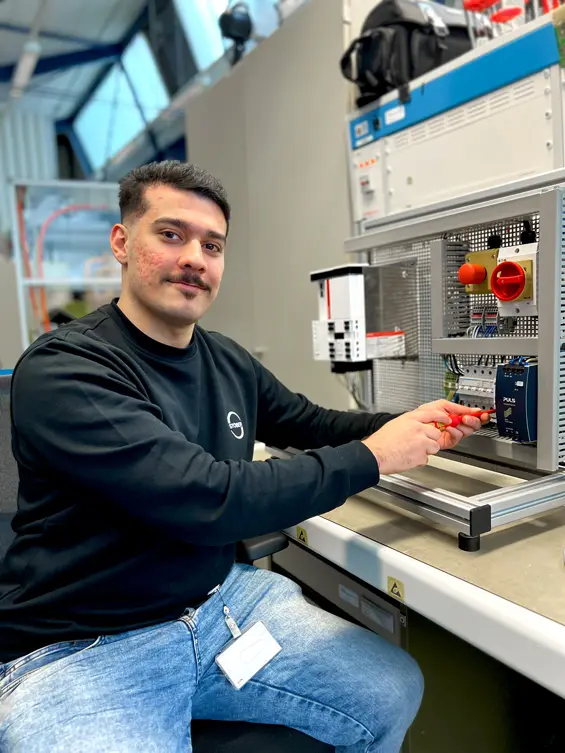
Sinan-Anwer Anwer
Apprentice Electronics Technician
Why did you choose this apprenticeship/occupation?
I’ve always been interested in electrical engineering, and this profession offers many opportunities for further development. Because it combines theory and practice, there’s little risk of being replaced by AI in the future.
And why did you choose STOBER?
STOBER is an international company, and as an apprentice, you receive excellent training and are treated with respect.
What does your typical week or day look like?
I attend vocational school every two weeks, and on the days I’m at the company, I work on training-related assignments.
What tasks and responsibilities do you have during your apprenticeship?
Soldering, drawing circuit diagrams, building and wiring circuits, programming, and taking measurements.
What do you enjoy most about your apprenticeship/work?
Designing and assembling circuits, taking measurements, and testing devices.
What skills are important for this profession?
Good knowledge of mathematics and physics, a genuine interest in the field, and the ability to work independently.
What personal tips do you have for students?
Do internships to find out if this is the right profession for you.
What makes the apprenticeship at STÖBER special for you?
I can work at my own pace without being under pressure.
More interesting info
Any questions?

Your contact person
Heike Grun
How do I apply for a job at STOBER? What is the application process like? What information should your documents contain?
As a family-owned company, it is very important to us to maintain close relationships and a basis of trust with our employees, customers, and partners. We put people first.
Meet STOBER at many trade shows, training fairs, and other events.